It happens in a split second. A slick leaf-covered step, an icy driveway, a slide into second base. You put your hand out to catch yourself, and your wrist takes the hit. Within minutes it’s swollen and sore, and turning a doorknob or holding a coffee cup suddenly feels impossible.
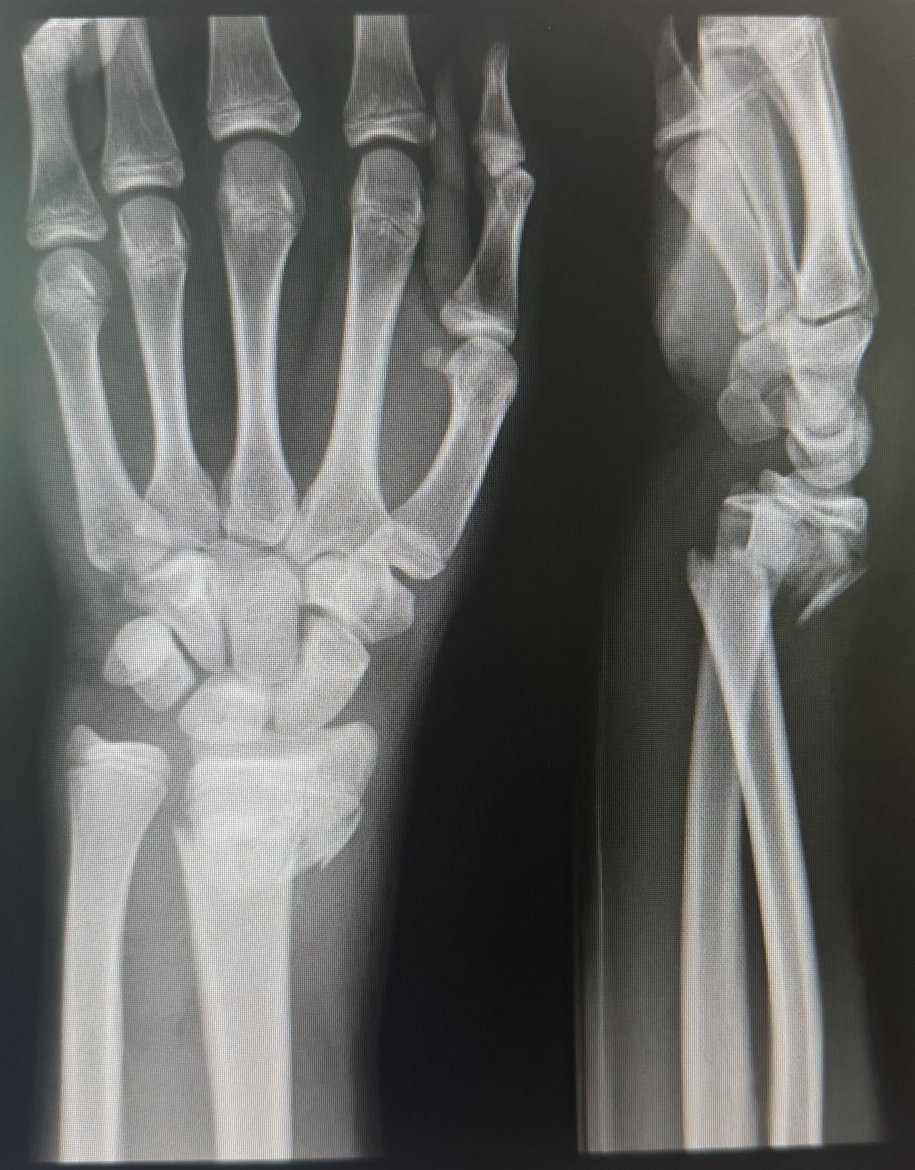
If you’re not sure yet whether it’s sprained or broken, start with our guide to sprain vs break. This post picks up from there: the X-ray shows a broken wrist. Now what?
What it feels like right after the fall
A broken wrist usually announces itself with:
- Pain that’s sharp with movement and tender right over the bone
- Swelling and bruising that build over the first hours
- Trouble gripping, twisting, or bearing weight through the hand
- Sometimes a bump or bend that wasn’t there before
- Sometimes numbness or tingling in the fingers
Fingers that look pale or feel cold, or bone poking through the skin, need emergency care right away.
What a wrist fracture actually is
Your forearm has two bones, the radius and the ulna. When you fall on an outstretched hand, the force often breaks the end of the radius just above the wrist. That’s called a distal radius fracture, and it’s one of the most common breaks orthopedic surgeons treat. Sometimes the small tip of the ulna or one of the small wrist bones, like the scaphoid, is injured too.
Some breaks are a simple crack with the bone still in place. Others shift out of position, break into several pieces, or run into the joint surface where the wrist bends.
Cast or splint vs. surgery: what goes into the decision
Many broken wrists heal well without surgery. A hand surgeon looks at a few key things when deciding:
- Alignment. Is the bone still lined up close to normal, or is it tilted or shortened?
- Displacement and stability. Did the pieces shift? If the bone was set back into place, will it stay there in a cast?
- Joint involvement. If the break runs into the joint surface and leaves a step-off, it can affect motion and raise the risk of arthritis later.
- Your age, health, and activity. A carpenter, a college athlete, and a retiree may need different things from the same wrist. Bone quality matters too.
When the break is stable and well aligned, a splint and then a cast or brace is often all it needs. Follow-up X-rays matter because a break can slowly shift as swelling goes down, even if it looked fine on day one.
Surgery comes up when the bone won’t stay lined up, the joint surface is uneven, or the break is badly displaced. In those cases, a surgeon uses a plate and screws, or sometimes pins, to hold the bone in position while it heals. Timing matters, so it helps to be evaluated early rather than waiting a week or two.
What recovery usually looks like
Think of these as general ranges, not promises:
- With a cast: Protection usually lasts several weeks, with X-ray checks along the way. Stiffness is normal when it comes off.
- After surgery: Patients often move into a removable splint sooner and start guided motion earlier. The bone still needs about the same time to heal.
- Therapy: Hand therapy helps many people regain motion and grip strength.
- Full strength: Lifting, sports, and heavy work can take a few months to return to. Some stiffness can linger longer, especially as we age.
If tingling in your fingers sticks around after a wrist injury, mention it. Swelling can put pressure on the median nerve, the same nerve involved in carpal tunnel syndrome.
When to be seen
Get your wrist checked if pain and swelling aren’t easing after a day or two, if you can’t grip or bear weight through the hand, or if it looks crooked. Our fracture care includes on-site X-rays, and wrist and hand fractures are treated by Dr. Troy Keoni Williams, MD, our board-certified, fellowship-trained hand surgeon. Learn more about our hand, wrist, and elbow care.
Call (586) 436-3785 to schedule with Dr. Troy Keoni Williams, MD, at our Clinton Township office (43475 Dalcoma Dr., Suite 250). Walk-in hours change week to week, so call ahead or check our walk-in page for current times before you come in.
This article is general information, not medical advice. Every injury is different, so see a physician about your own situation before deciding on treatment.